Photo Guide · 6 min
Photography Tips for the PIER 39 Sea Lions
Light angle, lens choice, and the behavioural moments worth waiting for. How to come back with a frame that actually shows what K-Dock feels like.
The light angle problem and how to solve it
K-Dock runs roughly east–west off the pier. In the morning, the docks are front-lit from the east — good for detail but flat on the water. By mid-afternoon, the sun moves southwest and creates harsh top-light that flattens the animals and blows out wet fur highlights. The golden hour window, roughly 60–90 minutes before sunset, delivers side-and-front light from the west that gives the animals texture and the Bay behind them a warm glow.
In practice: arrive at the rail 90 minutes before sunset for the best photographic conditions. The crowd also thins after 5 PM on most days.
Focal length and framing
The public rail is roughly 20–30 metres from the nearest docks. A 200mm lens on a full-frame camera (or 135mm on APS-C) will give you a tight single-animal frame. A 100mm equivalent captures a small dock cluster. If you only have a phone: the docks are close enough for a usable wide establishing shot, but you will not fill the frame with individual animals without a telephoto clip-on attachment.
The most compelling frames usually include the Bay context: use a 35–50mm equivalent to capture dock, animals, and the water behind them in a single composition. The Alcatraz or East Bay hills in the background immediately ground the image in San Francisco.
Behavioural moments worth waiting for
Threat display: a male rears its upper body and opens its mouth wide toward a neighbour. This is non-injurious but dramatic — worth positioning for if you see tension building between two large males.
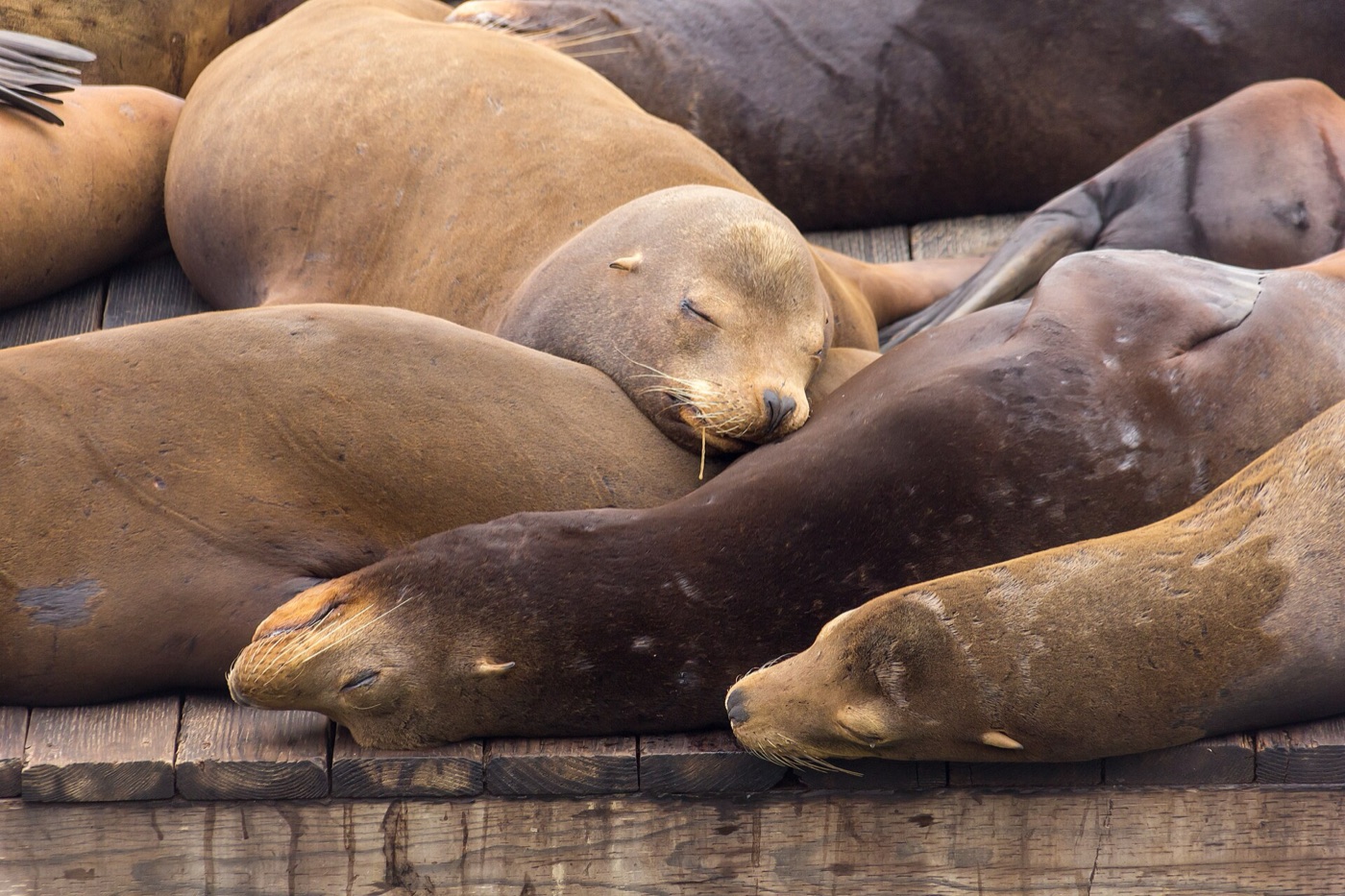
Pile-on: as the dock fills, newer arrivals literally climb over sleeping animals to find a spot. A three-deep pile of basking sea lions gives a sense of scale unavailable in single-animal shots.
Arrival and departure: individuals entering from the water shake off and survey the dock before hauling out. The spray and momentum make dynamic frames. Watch the edges of the dock for arriving animals.
Practical notes
No flash, especially at night or dusk. No drone flights over the marina — FAA rules and animal welfare both prohibit it. A monopod (tripod legs catch on the rail) steadies a long telephoto. Burst mode at 5–10 fps captures the decisive moment in fast social interactions. For post-processing: the animals' wet fur is high-contrast; pull highlights down to keep detail in the brightest patches.