Visitor Safety · 4 min
Sea Lion Safety and Etiquette at PIER 39
What the law requires, what the animals need, and the three behaviours that get visitors into trouble most often at K-Dock.
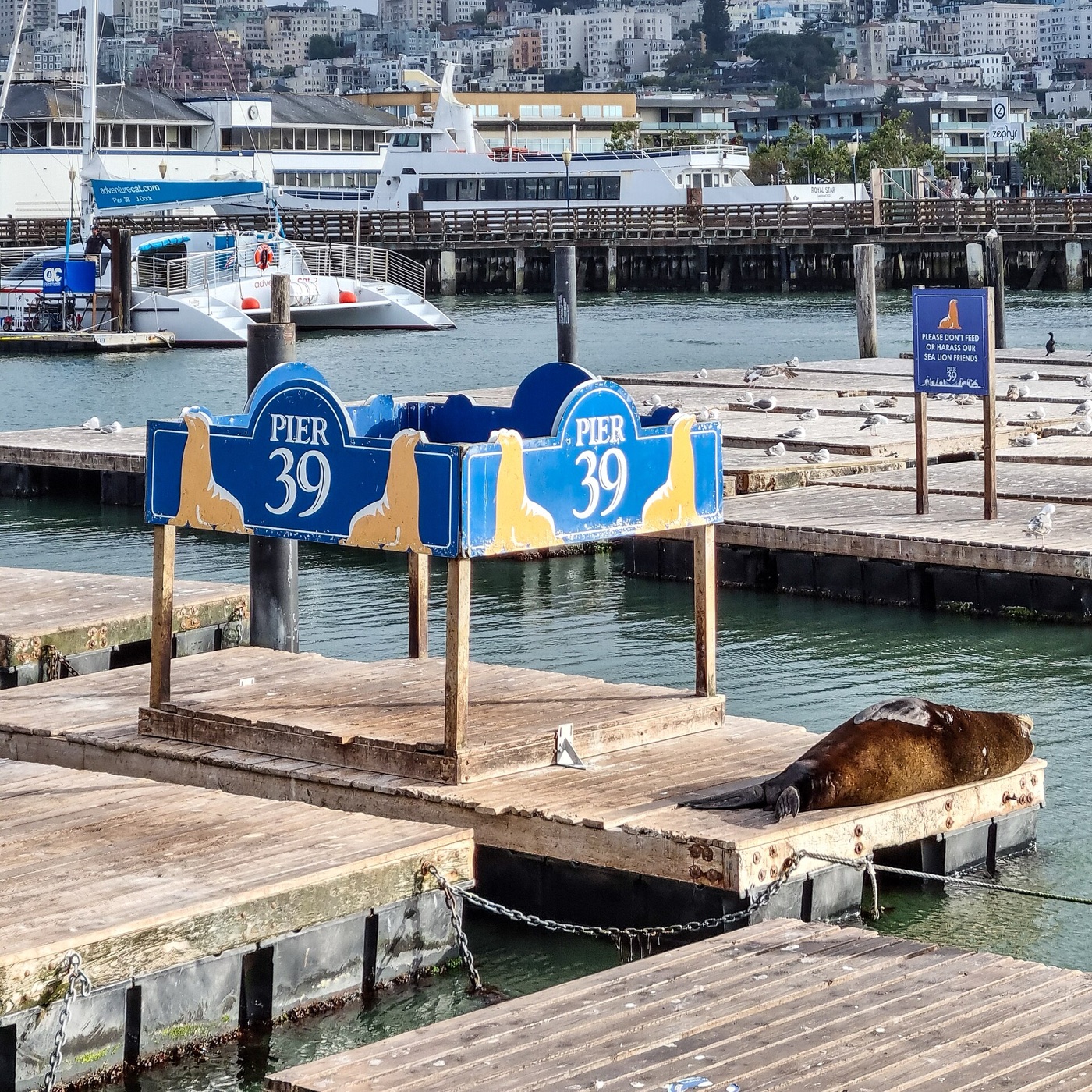
The Marine Mammal Protection Act applies here
Every sea lion at PIER 39 is a protected marine mammal under the U.S. Marine Mammal Protection Act (MMPA). Harassment — defined broadly as any act that disrupts normal behaviour including resting, feeding, or social interaction — is a federal offence. The rail at K-Dock exists partly to keep the public at a legally and practically safe distance.
Fines for MMPA violations can reach US$10,000 per incident. Beyond the legal risk, harassment causes real harm: stressed animals haul out less, eat less, and can injure one another or humans when startled.
The three most common mistakes
Feeding. It seems harmless but creates dangerous food-association behaviour. Sea lions that associate humans with food become aggressive and beg at boat docks, creating injury risk for both animals and people. Never toss fish, crackers, or any food toward the docks.
Leaning over or climbing the rail. The water between the public walkway and K-Dock is a live marine mammal zone. Leaning over to get closer for a photo has resulted in sea lion bites and falls into the bay. Stay behind the rail entirely.
Flash photography at close range. Flash directed at sea lions at night or in low light startles the colony and can trigger stampede events on the docks, injuring smaller animals. Use natural or ambient light; if you want a sharp shot, a longer lens beats proximity.
What normal behaviour looks like
A healthy K-Dock colony mostly basks, barks, and jostles for prime dock space. Occasional aggressive lunge displays between males are normal. If you see an animal that appears injured, entangled in fishing gear, or unusually lethargic on the walkway (outside the dock), contact PIER 39 staff or call the Marine Mammal Center hotline.