Origin Story · 7 min
How the 1989 Earthquake Started the PIER 39 Sea Lion Colony
The Loma Prieta earthquake damaged boat slips, marina tenants left, and within weeks a handful of sea lions moved in. Thirty-five years later, the colony is one of San Francisco's most-visited attractions.
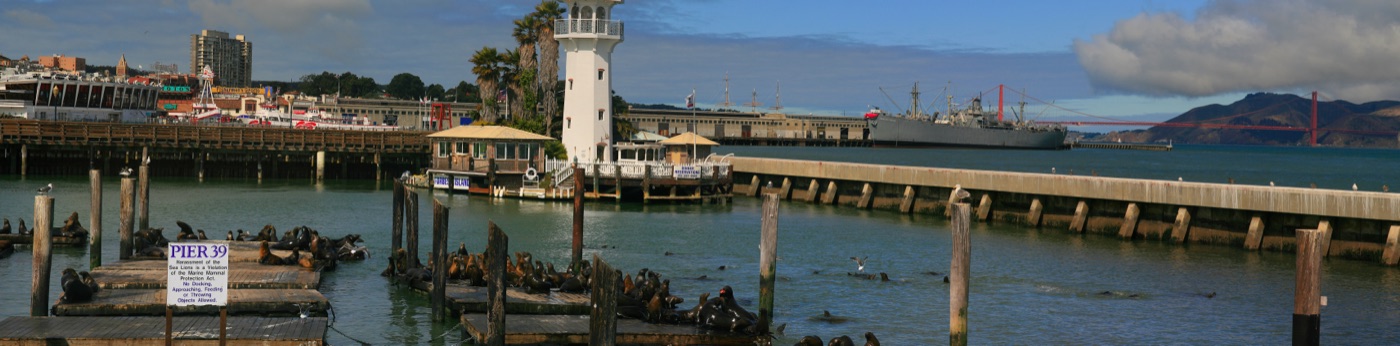
October 1989: the quake and the marina
The Loma Prieta earthquake struck on October 17, 1989, at 5:04 PM Pacific time — minutes into Game 3 of the World Series, which was being played at Candlestick Park. Magnitude 6.9. The Marina District burned; the Bay Bridge cracked; 63 people died.
PIER 39's marina suffered structural damage. Many boat slips were vacated as owners made repairs or left. The empty, low-floating docks — specifically K-Dock — offered exactly what a foraging California sea lion looks for: a stable, predator-free haul-out surface near good fishing.
A handful becomes hundreds
A few sea lions appeared on K-Dock within weeks of the earthquake. By January 1990 the group had grown to dozens. Marina tenants were unhappy — the animals were loud, smelled strongly of fish, and occupied dock space that could otherwise earn slip fees. PIER 39 management consulted with the Marine Mammal Center in Sausalito.
The recommendation was unexpected: let them stay. The sea lions had legally protected status, they were not damaging anything structurally, and they represented an extraordinary free wildlife experience in the middle of an urban pier. Management agreed. The boats moved to other slips. K-Dock was informally surrendered to the colony.
The 2009 disappearance and return
In late 2009 the colony almost entirely vacated K-Dock. Counts dropped from hundreds to nearly zero over a few weeks. The leading explanation: a shift in sardine and anchovy concentrations driven by ocean temperature changes. The animals followed the food, likely to the Channel Islands.
They returned, and by the 2010s the colony had re-established. The 2009 event is a reminder that the sea lions are wild animals responding to ocean conditions, not a permanent fixture. The Marine Mammal Center and PIER 39 maintain monitoring precisely because the population can change rapidly.
The 2024 record and the Chonkers era
PIER 39 announced an all-time count above 2,100 sea lions in May–June 2024. The surge coincided with a strong upwelling event off the California coast that concentrated prey fish near the Bay. By 2026 the colony had also gained its most recognisable individual: Chonkers, a Steller sea lion who became a viral phenomenon and drew national media attention to K-Dock.