Wildlife Education · 5 min
Sea Lion vs. Seal: How to Tell Them Apart at PIER 39
Ears, flippers, and posture — the three field marks that separate sea lions from true seals, plus why the PIER 39 animals can walk but harbour seals cannot.
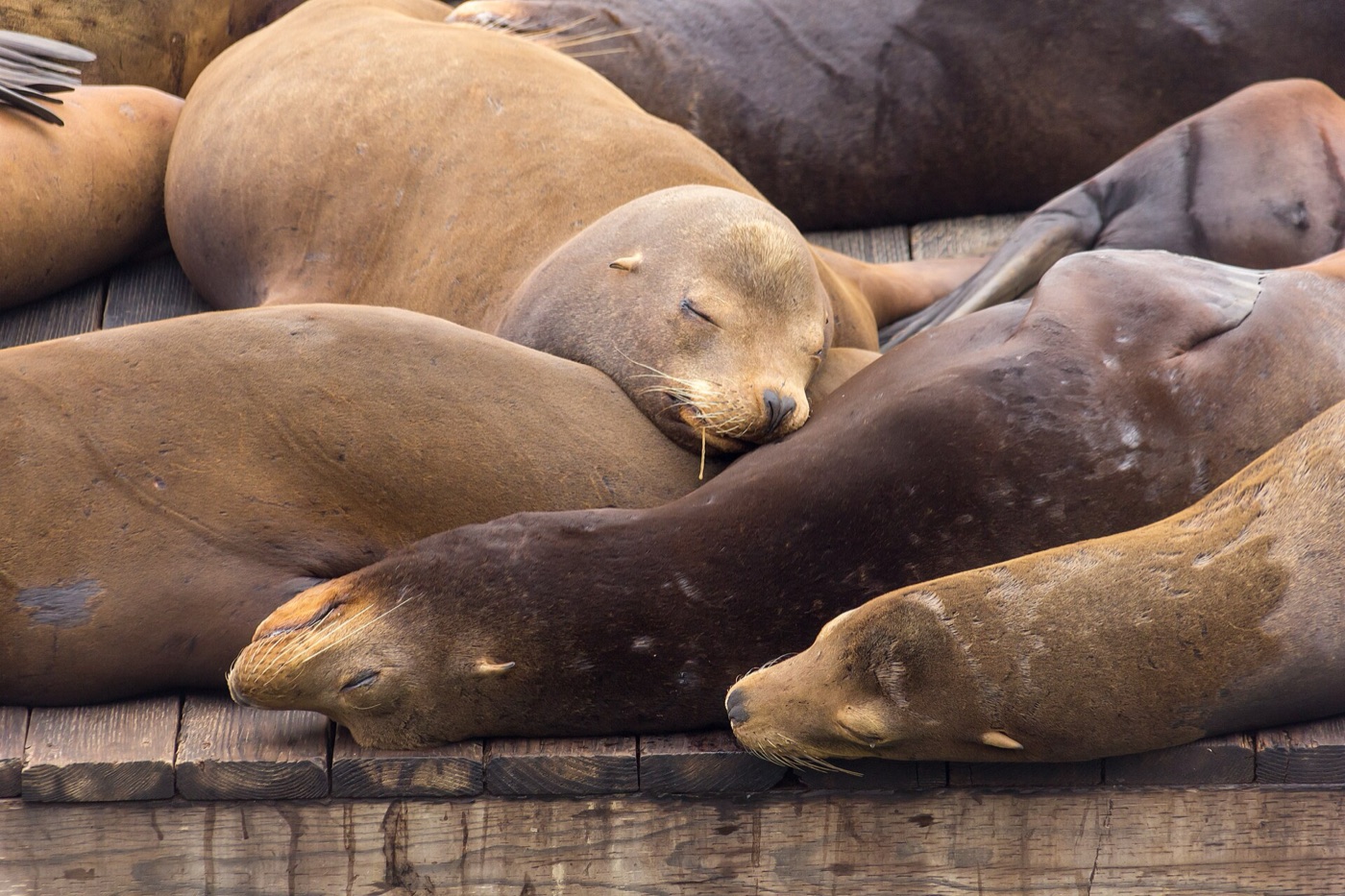
The ear flap is the fastest clue
California sea lions are eared seals (family Otariidae). They have small but visible external ear flaps on either side of the head. True seals (family Phocidae) — like the harbour seals sometimes seen at Baker Beach or Pier 39 in small numbers — have no external ear flap, only a tiny ear opening flush with the skin.
At K-Dock you can often see this difference from the rail with the naked eye if the animal turns its head toward you. It is the single fastest field mark in pinniped identification.
Walking versus wriggling
Sea lions rotate their rear flippers forward under their body and can walk on all fours on land — an energetic, almost dog-like gait. This is why a sea lion that ends up on the public walkway can move quickly and unpredictably. True seals cannot rotate their rear flippers forward; they wriggle on their belly in a caterpillar motion on land, which is far slower.
At PIER 39, the sea lions use this mobility to clamber up dock ramps, jostle for space, and occasionally haul out onto unusual surfaces near the marina.
Size and colouring
Adult male California sea lions are dark brown to black when wet, lighter tan when dry. Females are smaller and consistently lighter brown. Harbour seals are spotted and much smaller — typically 100–130 kilograms compared to 200–300 kilograms for an adult female California sea lion.
Chonkers, the resident Steller sea lion, demonstrates the upper end of the eared seal size range: over 1,000 kilograms, with a paler golden-brown coat and a distinctly massive neck and shoulders.